The meteoric rise of esports has captivated millions worldwide, transforming a niche hobby into a global phenomenon. From the dimly lit basements where enthusiasts once huddled around bulky monitors, esports has evolved, now commanding the attention of vast audiences in grand stadiums. This journey, spanning decades, is a testament to the gaming community’s passion, innovation, and resilience. As we delve into this evolution, we’ll explore the milestones that have shaped the esports landscape, from its humble beginnings to its undeniable mainstream presence.
Contents
The Humble Beginnings

In the 1970s and 1980s, the world witnessed the dawn of video game competitions. These were modest events, often held in local arcades or community centers, not the grand spectacles we see today. For instance, the Stanford Intergalactic Spacewar Olympics in 1972 marked one of the earliest recorded video game tournaments, setting a precedent for competitive gaming.
Local LAN parties became the heart and soul of early competitive gaming. Friends would gather in basements, garages, or any available space, connecting their computers to engage in virtual battles. These gatherings, though small in scale, were foundational, fostering a sense of community and camaraderie that would become synonymous with esports.
The Rise of Competitive Gaming

As the 1990s rolled in, the gaming world saw the emergence of multiplayer online games that would change the landscape forever. Titles like Quake, StarCraft, and Counter-Strike offered exhilarating gameplay and ignited the competitive spirit among players. With their intricate strategies and team dynamics, these games became the bedrock of the burgeoning esports scene.
The formation of professional gaming leagues was parallel to the rise of these iconic games. The Cyberathlete Professional League (CPL) and World Cyber Games (WCG), among others, began organizing tournaments that attracted players from across the globe. These leagues provided a platform for gamers to showcase their skills, drawing attention to the potential of esports as a legitimate and organized sport.
The Role of Technology and the Internet

The turn of the millennium brought technological advancements that would prove pivotal for esports. Faster internet speeds enabled seamless online gameplay, reducing lag and enhancing the gaming experience. This era also saw the advent of online streaming platforms, with Twitch and YouTube emerging as frontrunners, allowing fans to watch their favorite players and teams from anywhere in the world.
Simultaneously, the evolution of gaming hardware played a crucial role. High-performance PCs, with powerful graphics cards and processors, became more accessible. Gaming consoles, too, underwent significant upgrades. These technological strides ensured that games looked and played better, further fueling the growth of competitive gaming and making it more appealing to broader audiences.
The Emergence of Esports Organizations

As competitive gaming gained traction, there was a clear need for structure and organization. This led to esports teams and organizations, entities dedicated to training players, strategizing gameplay, and managing business. Renowned names like Team Liquid, Fnatic, and TSM began to emerge, each vying for dominance in various game titles.
With the spotlight on esports, sponsors, and investors started to notice. Brands previously unrelated to gaming, such as Red Bull and Intel, began pouring resources into the industry. Their involvement provided financial stability and added a layer of legitimacy to esports, signaling its transition from a subculture to a mainstream enterprise.
Esports Goes Mainstream

The 2010s can arguably be termed the ‘golden decade’ for esports. Pop culture began to embrace this digital revolution, referencing competitive gaming in movies, TV shows, and even music. The lines between traditional sports and esports started to blur, with mainstream media outlets like ESPN and BBC dedicating segments and even entire channels to esports coverage.
Higher education institutions recognized the potential and allure of esports, with universities across the globe offering scholarships to talented gamers. This academic embrace further solidified esports’ position in mainstream culture, ensuring it was no longer a fleeting trend but a fixture in the global entertainment landscape.
The Global Phenomenon
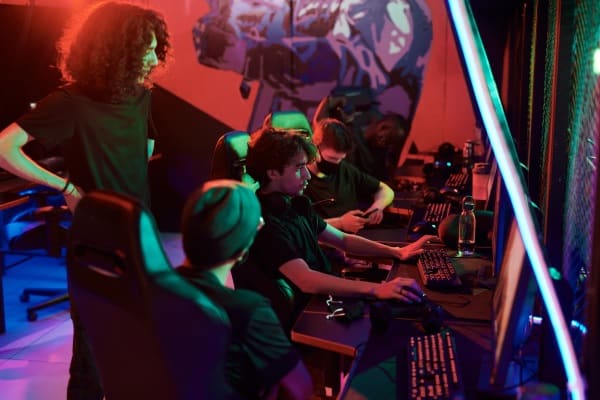
Esports’ global appeal became undeniable as international tournaments offered staggering prize pools. Events like The International for Dota 2 and the League of Legends World Championship attracted participants and viewers from around the globe. These tournaments weren’t just about the games; they were cultural events, bringing together diverse communities under shared passion.
Asia, particularly South Korea, played a pivotal role in propelling esports to its current heights. The nation embraced competitive gaming like no other, with dedicated TV channels, state-of-the-art gaming houses, and unparalleled societal acceptance. This Asian influence was instrumental in shaping esports’ global perception and acceptance.
Esports in Stadiums

The true testament to esports’ colossal growth was its transition from online streams to packed stadiums. Iconic venues like Madison Square Garden and the Staples Center, previously reserved for traditional sports and concerts, began hosting esports events. Fans worldwide would travel to these venues, donning their team’s colors, chanting slogans, and immersing themselves in the electric atmosphere.
Attending a live esports event became an experience in itself. Beyond the games, these events offered fan interactions, exclusive merchandise, and a sense of belonging. The crowd’s roar, the synchronized cheers, and the collective gasps made it evident: esports had arrived, and it was here to stay.
The Future of Esports
The horizon looks promising for esports. With technological advancements in Virtual Reality (VR) and Augmented Reality (AR), the next frontier for competitive gaming seems boundless. These technologies promise to offer immersive experiences, potentially revolutionizing how games are played and viewed.
Furthermore, integrating Artificial Intelligence (AI) and machine learning offers intriguing possibilities. From enhancing player training to providing in-depth game analytics, these technologies could redefine competitive strategies and gameplay. As discussions about including esports in the Olympics gain momentum, one thing is clear: the journey of esports, from basements to stadiums, is just the beginning.
The Bottom Line
Reflecting on the evolution of esports, it’s awe-inspiring to witness how a niche hobby transformed into a global sensation. From its grassroots beginnings to its current status as a mainstream juggernaut, esports has defied expectations at every turn. At the heart of this evolution lies a passionate community whose unwavering support and enthusiasm have propelled esports to unparalleled heights. As we stand on the cusp of new technological advancements and possibilities, the future of esports shines brighter than ever, promising excitement, innovation, and countless memories for generations to come.