Netflix Is Turning Willy Wonka’s Chocolate Factory Into a Real-World Social Experiment
A new Netflix competition series reimagines Roald Dahl’s classic world with a $3 million prize, AI-generated narration, and real contestants navigating candy-colored chaos.
When Netflix decided to transform Willy Wonka’s Chocolate Factory from a beloved fictional landmark into a full-scale competitive arena, the streaming giant set off a chain of conversations touching on nostalgia, artificial intelligence, and the ethics of resurrecting the dead. Wonka’s The Golden Ticket, which premiered on September 23, 2026, pulls freely from the world built by Roald Dahl’s 1964 children’s novel and the 1971 Gene Wilder film that followed, constructing an immersive physical environment complete with lickable wallpaper, an edible garden full of gummy foliage, and a chocolate river containing 25,000 gallons of chocolate goop — all in service of a high-stakes reality competition that rewards cunning as much as character.
A Chocolate Factory Competition Built on Strategy, Not Morality
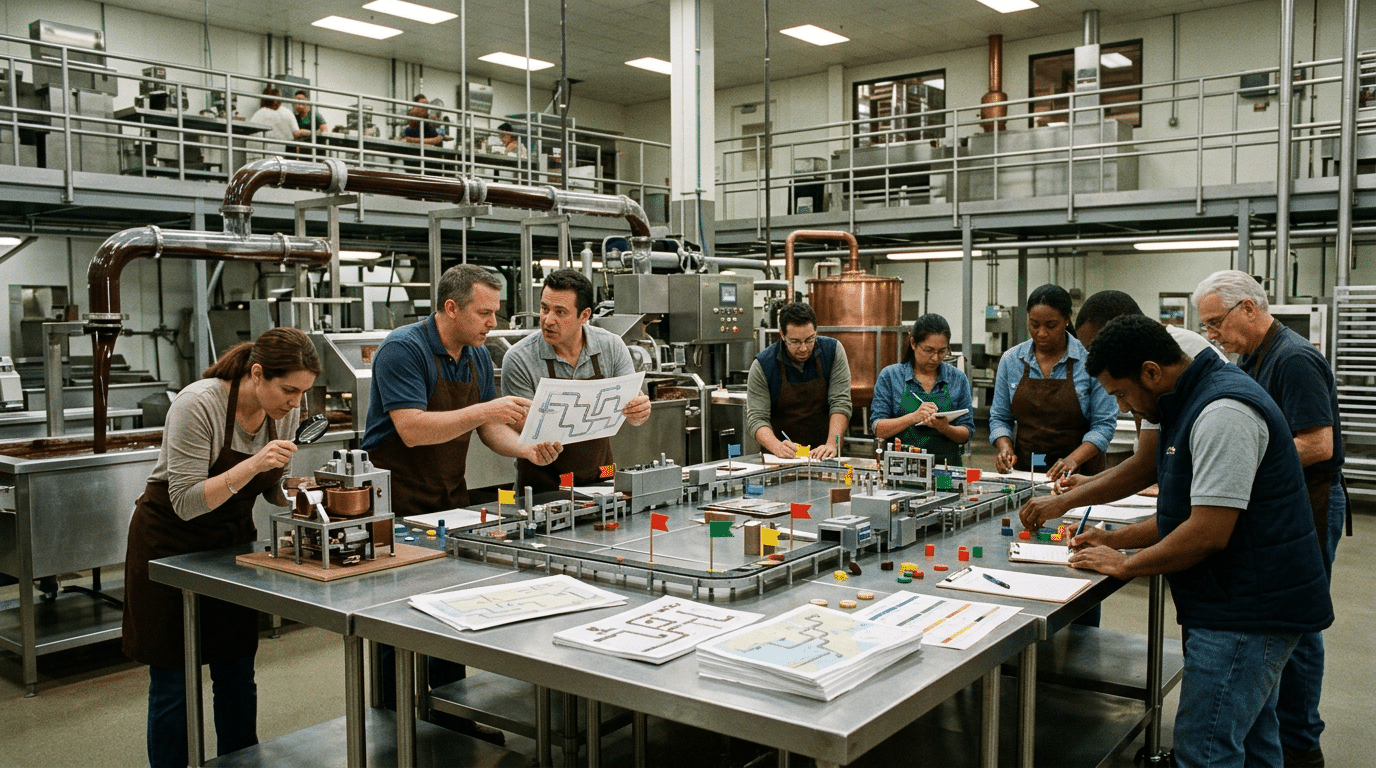
In Dahl’s original story, young Charlie Bucket earns the ultimate reward not through cleverness or competition, but through his fundamental decency — his humility and refusal to be corrupted by the factory’s temptations. Netflix’s version flips that moral premise on its head. Rather than discouraging greed and scheming, the show actively structures its format to incentivize exactly those behaviors, with contestants vying for a $3 million prize through a series of challenges designed to test judgment, resilience, and cunning in equal measure. The competitors earned their entry onto the show by discovering a golden ticket hidden within a Wonka-branded chocolate bar — a nod to the source material — before arriving at a giant candy-colored factory to face what the show’s own promotional materials describe as “delicious mischief.”
Showrunner Emer Harkin has been direct about the decision to abandon any attempt at editorial moralizing. Rather than positioning the production as arbiter of correct behavior, Harkin framed the show’s ethos around a more permissive view of human nature.
“This is the modern-day take on the movie, so we weren’t really ever trying to be the morality police. We never ever wanted to set out to be the producers that dictated who behaved well and who behaved poorly. Because let’s be real, we’re all human. We all make mistakes. We all misbehave. We seek redemption. We all have our inflected storylines, and so that was important for us.”
— Emer Harkin, ShowrunnerBuilding the Factory: Magic, Mayhem, and Authentic Reactions

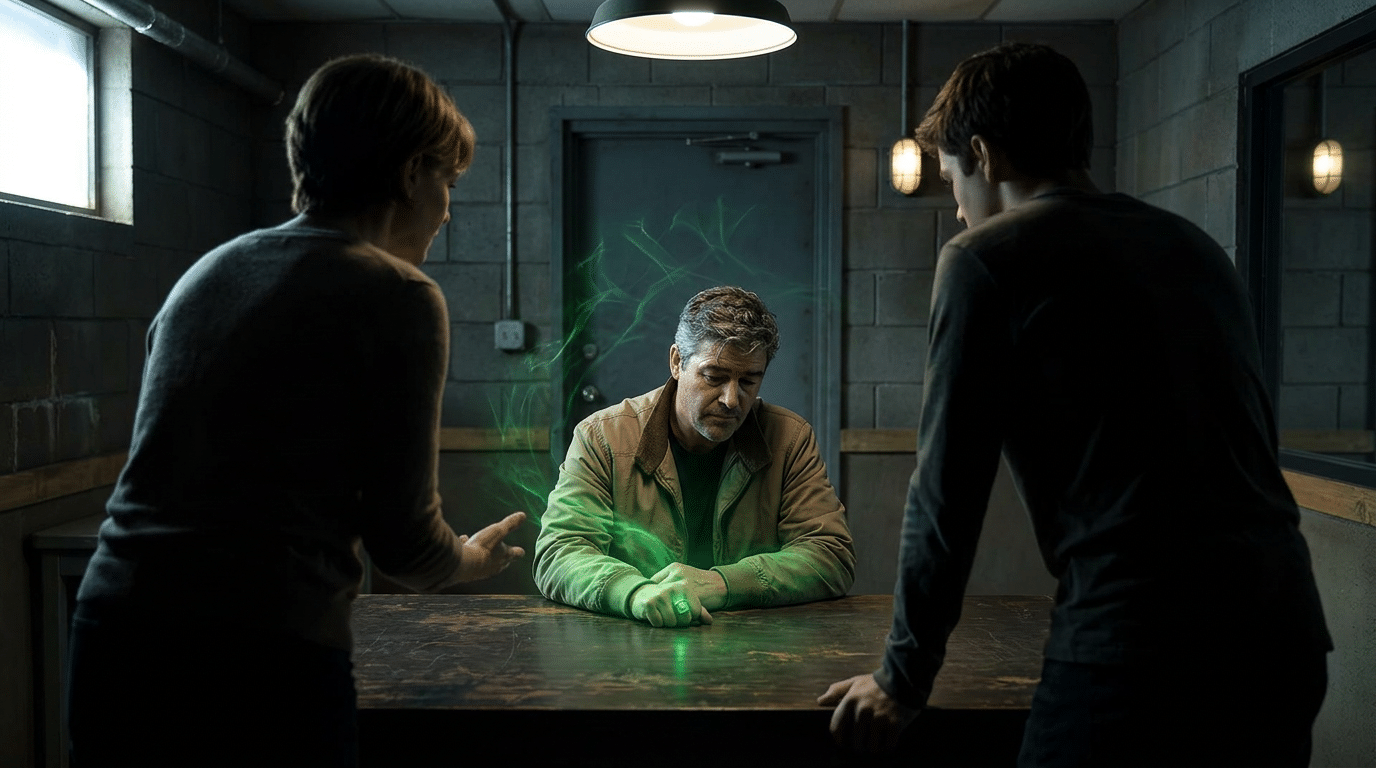
To give the production the feel of genuine wonder rather than staged spectacle, Netflix brought in a team of working magicians whose job was to ensure that the “magic” felt viscerally real to the contestants in the moment. The show’s co-showrunner Alison Holloway emphasized that authenticity in contestant reactions was a production priority from the very beginning. The opening challenge, in which some contestants vanished entirely in a cloud of fog while seated directly next to their partners, demonstrated that commitment — the showrunners insisted those reactions “had to be absolutely authentic.” No in-person host guides the show. Instead, the AI-generated voice of the late Gene Wilder floats through the factory at key moments to announce new challenges and signal the elimination of contestants.
The series follows 12 Golden Ticket winners, each paired with a partner of their choosing. The competitors navigate a sequence of themed challenges inside the factory environment. The show debuted on September 23, 2026, with a two-part finale scheduled for September 30.
Holloway described how the 1971 film served not merely as inspiration, but as a structural blueprint — something the production team returned to again and again throughout development.
“We watched that movie over and over and over again, and it gave us the template for the 2026 social experiment. We hope we’ve captured all the nostalgia … the magic that was always there, the unpredictability that was always there, the sort of darkness that was always there.”
— Alison Holloway, Co-ShowrunnerResurrecting Gene Wilder: AI Voice Technology and Industry Pushback
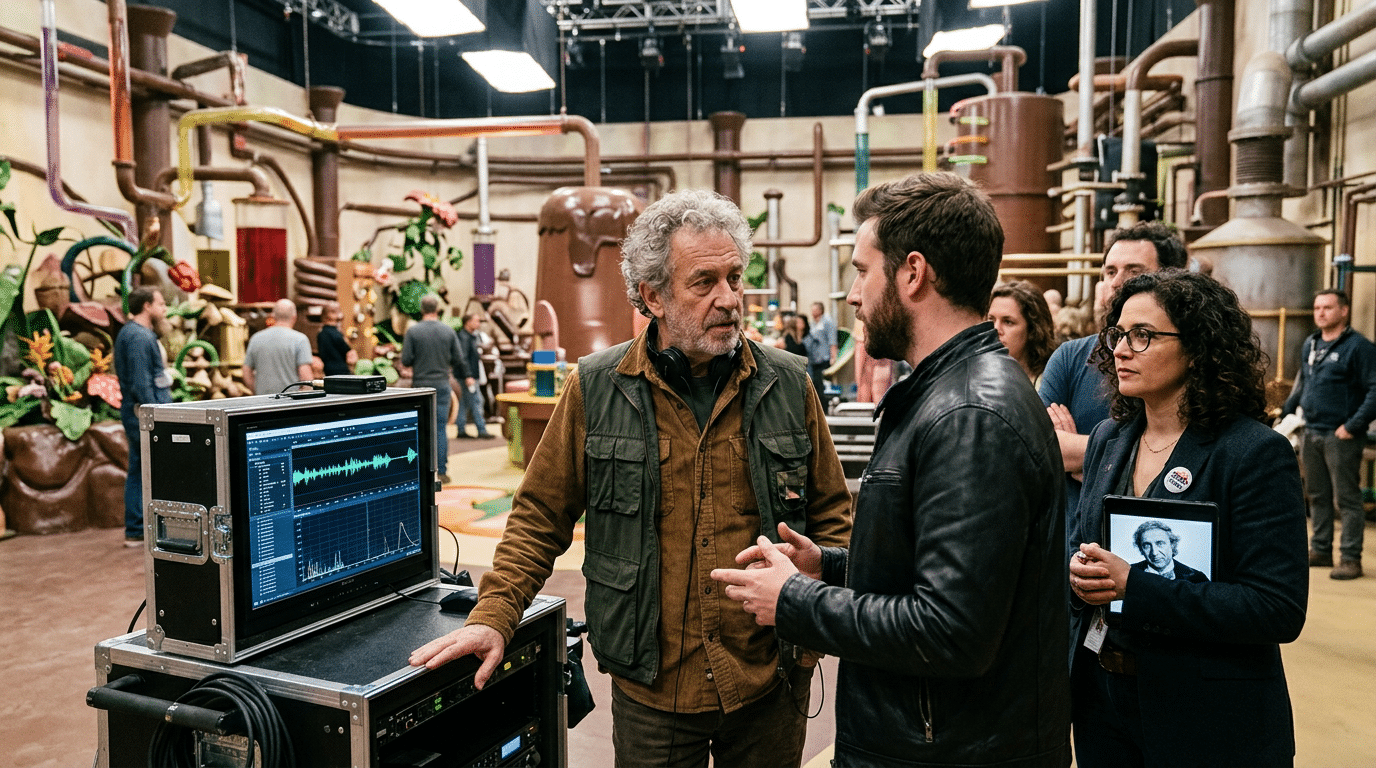
When the show’s trailer surfaced earlier in 2026, the element that drew the most immediate public attention was not the format or the prize money, but the voice. Netflix, working in partnership with AI audio company ElevenLabs, digitally reconstructed the voice of Gene Wilder — the actor who originated the role of Willy Wonka in 1971 and who died in 2016 — to serve as the show’s disembodied narrator. In the trailer, the AI-generated voice delivers the show’s central pitch to prospective contestants: “A whole new generation of real-life Golden Ticket holders will compete for a life-changing prize or say a most unfortunate goodbye. Marvel at the magic you remember and delight in my newest wonders beyond imagination. The most extraordinary competition on Earth is about to begin.”
The reaction from some corners of the public was pointed. Portions of the fanbase raised objections, with some noting that Wilder had been openly critical of Wonka remakes during his lifetime — specifically calling the 2005 Tim Burton version “an insult” and suggesting such projects existed primarily to generate money. Online commentary noted that while Wilder’s estate had authorized the use of his likeness, the actor himself never had the opportunity to provide — or withhold — personal consent.
Key Takeaway: The AI Voice Decision
Netflix and Eureka Productions partnered with ElevenLabs to reconstruct Gene Wilder’s voice using hours of the actor’s audiobooks, which were provided by his widow, Karen Boyer. The project was completed with the explicit approval and encouragement of both Boyer and the Gene Wilder Estate.
ElevenLabs has previously reconstructed the voices of other iconic figures for licensed projects, including Judy Garland and Burt Reynolds, and has been expanding its footprint in Hollywood through collaborations with major studios and individual celebrities.
The broader debate surrounding generative AI in Hollywood provided additional context for the controversy. Entertainment industry workers have voiced consistent concern about AI’s encroachment on creative labor in a market already strained by diminishing employment opportunities. The Wonka trailer became one focal point for those anxieties, with fans speculating about whether the late actor would have approved of the project given his documented hostility toward franchise revisits.
A Tribute, Not a Diminishment: The Case for Using Wilder’s Voice
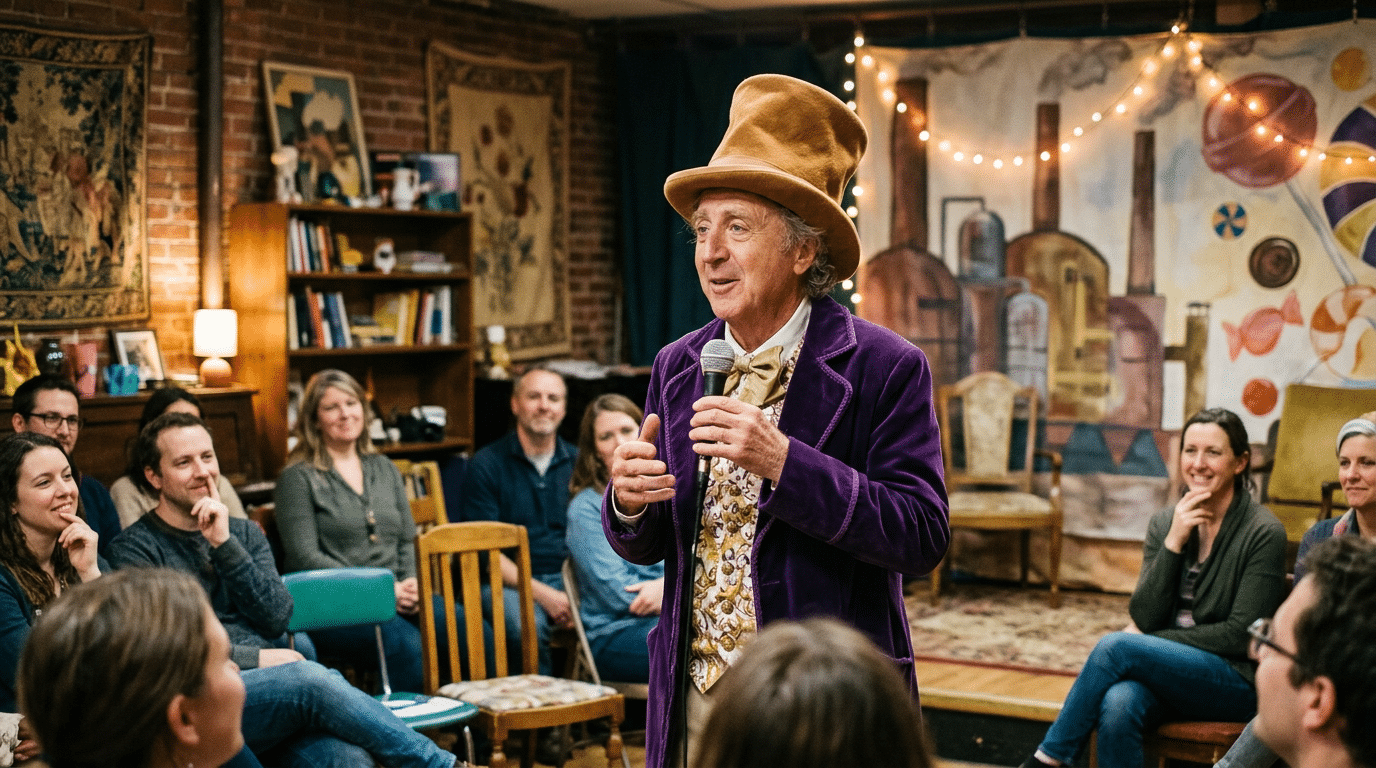
Holloway and Harkin have maintained that the decision to use Wilder’s voice was made out of genuine reverence rather than commercial convenience. In their account, the production arrived at the choice organically — the more the creative team developed the show, the more they found themselves asking what Wonka would do, and what Wilder himself would say in any given situation. That line of thinking ultimately led them to conclude that no alternative voice could carry the same meaning.
“The more we developed the series, the more we kept thinking: What would Wonka do at this point? What would Wonka say? I.e., What would Gene Wilder say? So it became clear to us that Gene Wilder was perhaps the only voice that could do this.”
— Alison Holloway, Co-ShowrunnerHolloway acknowledged the weight of public concern over AI use in creative contexts and did not dismiss those worries. What ultimately gave her confidence to move forward, she said, was the active support of Wilder’s widow. To reconstruct the voice as faithfully as possible, the production team worked through extensive hours of Wilder’s recorded audiobooks — material that Boyer personally made available to them. From that archive, ElevenLabs built the AI voice model used throughout the series.
“I think we have to believe that the people who loved him the most want this to happen. And of course, it’s out of total respect for his legacy that we’ve gone to such lengths to get it as best as we can.”
— Alison Holloway, Co-ShowrunnerKaren Boyer’s own statement, issued on behalf of the Gene Wilder Estate, framed the show as an extension of a legacy that has continued to resonate across generations. She described her late husband as someone with “a remarkable ability to bring humor, wonder, and heart into people’s lives” and expressed that the estate was pleased the production would introduce that spirit to new audiences while honoring those who have cherished the original for decades.
What the Show Signals for Reality TV and AI’s Role in Entertainment

The production of Wonka’s The Golden Ticket sits at an intersection of several ongoing tensions in the entertainment industry: the appetite for nostalgia-driven content, the expanding commercial use of AI voice technology, and the question of how much creative license studios should exercise when invoking the identities of deceased artists. ElevenLabs, the company at the center of the voice reconstruction effort, has been growing its presence in Hollywood steadily, having collaborated with studios and individual celebrities on a range of projects. Its work on the Wonka series is among its most high-profile applications to date. Whether the show’s gamble — blending Dahl’s imaginative world with the mechanics of modern competitive reality television — pays off in cultural resonance will likely be measured as much by the conversation it generates as by its viewership numbers.
Beyond the Factory Gates
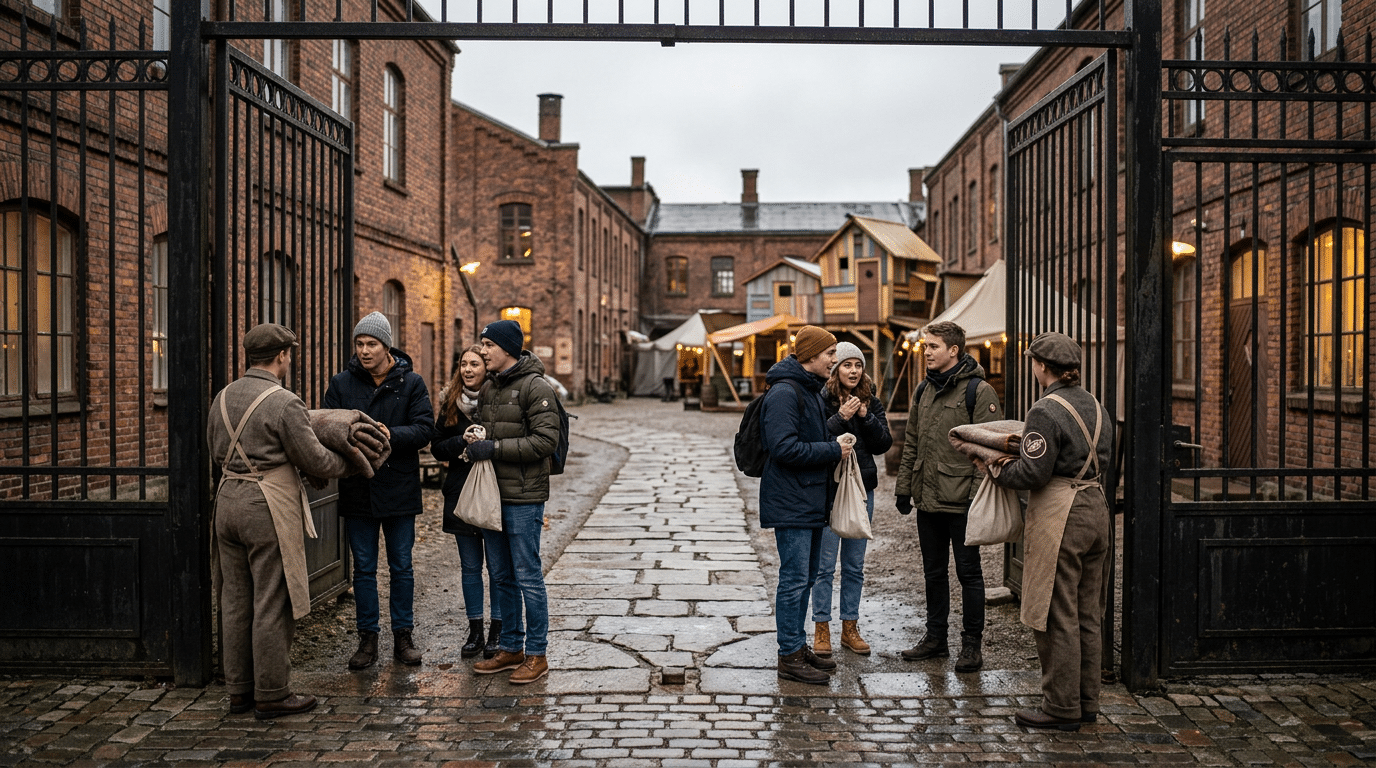
Netflix’s Wonka’s The Golden Ticket arrives as a genuinely unusual artifact of 2026 entertainment — a production that borrows freely from one of popular culture’s most cherished properties, reconstructs the voice of its most iconic performer using artificial intelligence, and then asks real human beings to navigate the resulting world for a $3 million prize. Whether viewers find that combination thrilling or troubling may depend less on what happens inside the chocolate factory and more on how they feel about the choices made long before the cameras started rolling. The show’s showrunners have framed their decisions as acts of tribute; their critics have framed those same decisions as cautionary examples of an industry moving faster than it should. Both readings exist simultaneously, and the factory gates are already open.