
Throughout gaming history, certain innovations have fundamentally transformed how players interact with virtual worlds, yet many of these breakthrough technologies have faded into obscurity. The most overlooked gaming innovations ever created range from pioneering motion controls that predated the Wii by decades to sophisticated artificial intelligence systems that were simply too advanced for their era.
The Sega Dreamcast’s Online Gaming Infrastructure
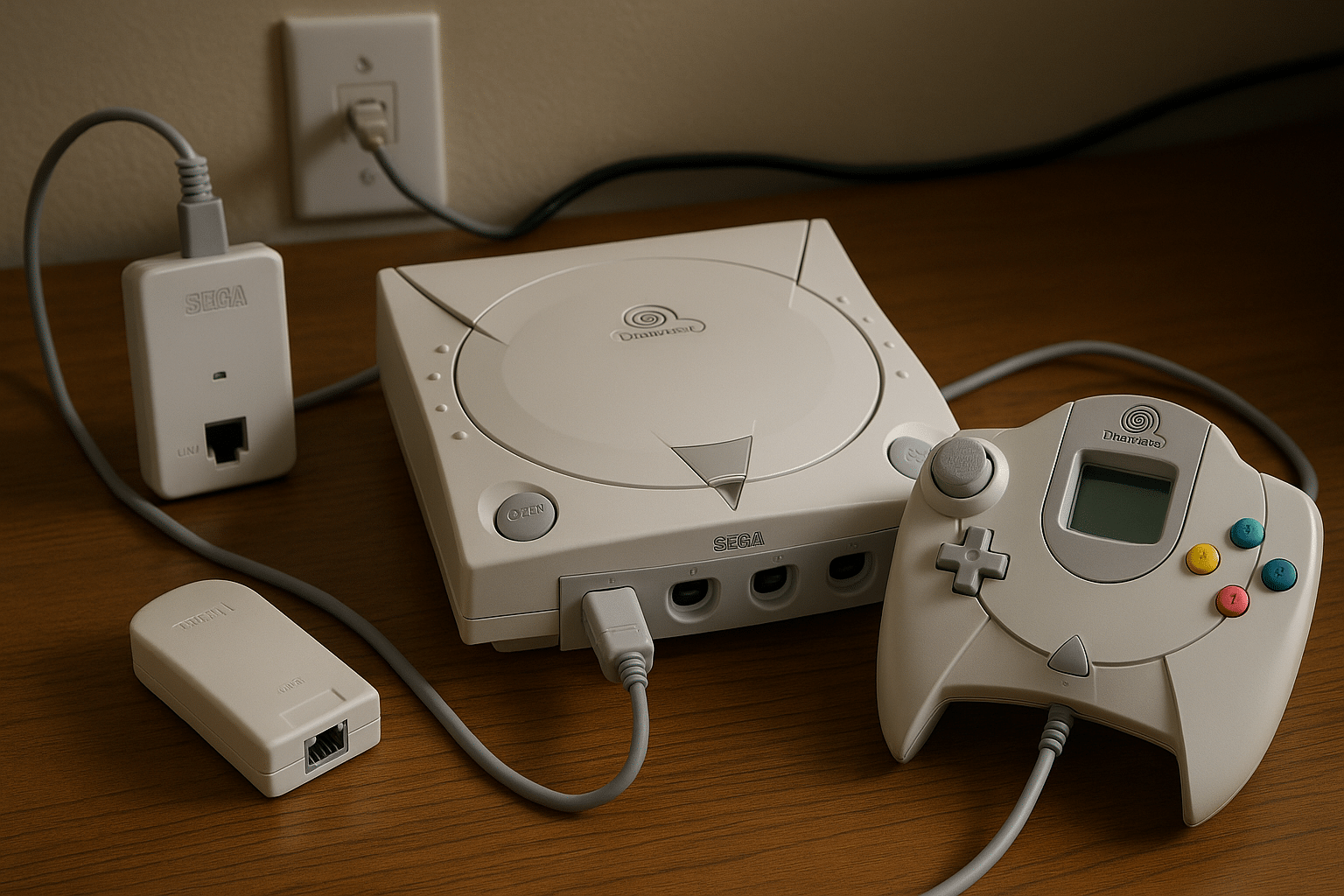
When Sega released the Dreamcast in 1998 in Japan and 1999 in North America, it included a built-in modem that allowed players to connect to the internet directly from their console. This was a revolutionary concept at the time, as online console gaming was virtually nonexistent in the mainstream market. The Dreamcast’s online service, SegaNet, offered players the ability to compete in titles like Phantasy Star Online and Quake III Arena against opponents worldwide, establishing templates for online multiplayer that Microsoft’s Xbox Live would later refine and popularize.
The console also supported a web browser and email functionality, effectively making it one of the first true multimedia gaming devices. Despite these innovations, the Dreamcast struggled commercially against the impending PlayStation 2, and Sega ultimately discontinued the console in 2001.
Editorial context: The Dreamcast sold approximately 9.13 million units worldwide before discontinuation, a fraction of the PlayStation 2’s eventual 155 million units. However, its influence on online gaming infrastructure far exceeded its market performance.
Analog Control and the Forgotten Precursors to Modern Input
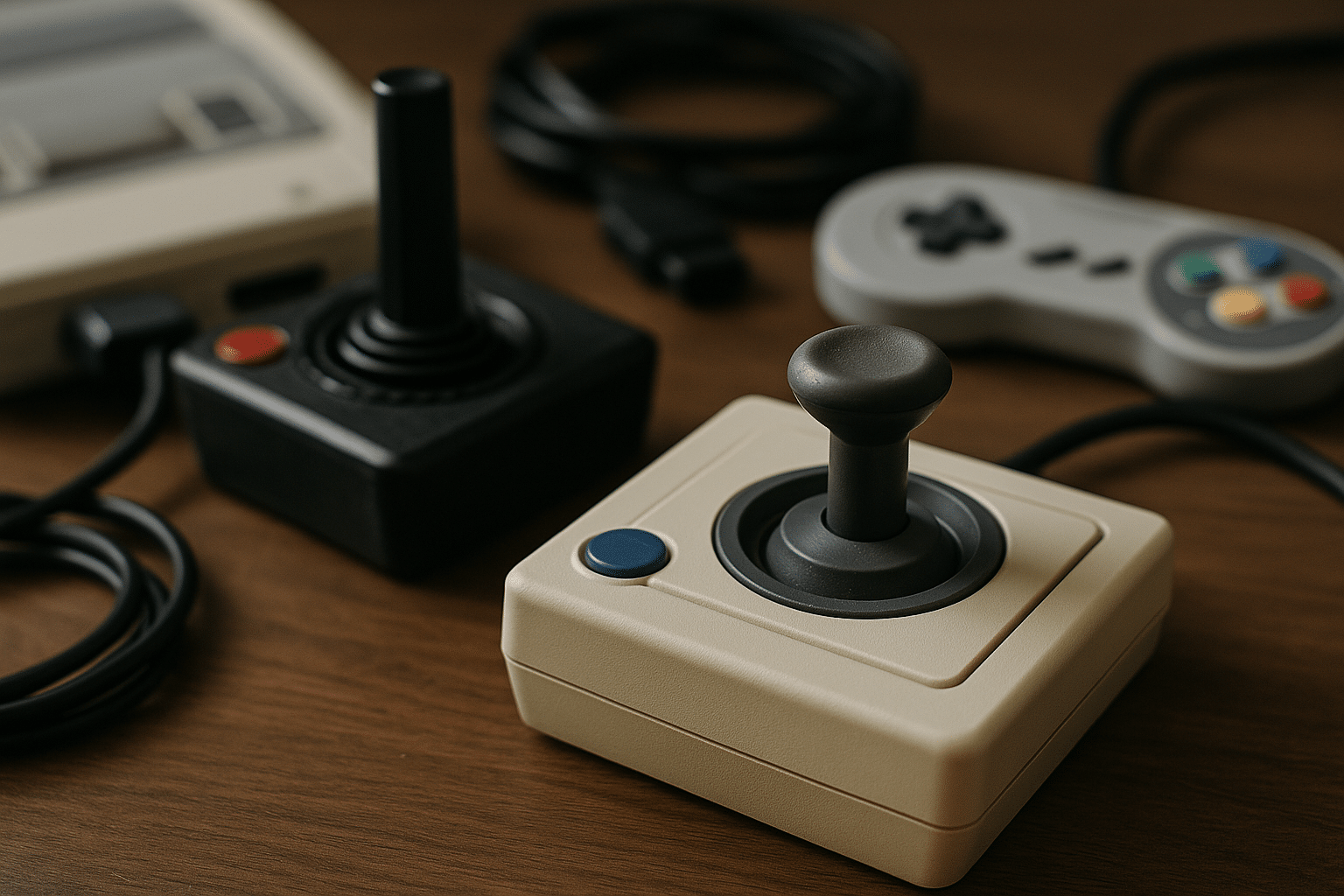
Before the Nintendo 64 controller popularized analog sticks in 1996, several earlier devices had experimented with analog input methods. The Vectrex, released in 1982, featured an analog joystick that provided smooth, precise control over vector-based graphics. The Atari 5200, also released in 1982, included a non-centering analog controller that, despite its mechanical issues, represented a genuine attempt to move beyond digital directional pads.
Similarly, the Sega Saturn’s 3D Control Pad, released in 1996 for games like NiGHTS into Dreams, introduced an analog thumb pad alongside traditional digital inputs. While the Nintendo 64 controller receives historical credit for mainstreaming analog control, these parallel and preceding efforts demonstrate that the gaming industry was collectively moving toward analog solutions.
- 1982: Vectrex and Atari 5200 introduce early analog control concepts to home consoles.
- 1995: Nintendo Virtual Boy attempts stereoscopic 3D gaming, predating modern VR headsets by two decades.
- 1998: Sega Dreamcast launches with built-in modem for online connectivity.
- 2000: The Emotion Engine in PlayStation 2 introduces vector processing architecture influencing future GPU designs.
- 2003: EyeToy brings camera-based motion gaming to consoles before Kinect popularizes the concept.
Camera-Based Motion Gaming Before Kinect

Sony’s EyeToy, released for the PlayStation 2 in 2003, introduced camera-based motion gaming to millions of console owners years before Microsoft’s Kinect captured mainstream attention. The peripheral used computer vision technology to detect player movements and translate them into on-screen actions without requiring a controller. Games like EyeToy: Play demonstrated the potential for full-body gaming experiences, selling over 10 million units of the camera peripheral worldwide.
The technology also enabled augmented reality experiences, overlaying digital elements onto real-world video feeds displayed on the television. When Microsoft released Kinect in 2010, many of the core interaction paradigms had already been established by Sony’s earlier experiment, though Kinect offered more sophisticated depth-sensing capabilities.
- EyeToy (2003): Pioneered controller-free gaming through computer vision on PlayStation 2.
- Hey You, Pikachu! (1998): Early voice recognition gaming on Nintendo 64 using the Voice Recognition Unit.
- Virtual Boy (1995): Nintendo’s stereoscopic 3D display predating modern VR headsets.
- Satellaview (1995): Satellite-based game distribution service in Japan anticipating digital downloads.
Adaptive AI Systems and Procedural Generation Pioneers

The artificial intelligence systems in many early games were far more sophisticated than players realized at the time. Creatures, developed by Creature Labs and released in 1996, featured artificial life forms called Norns that possessed genuine neural networks and genetic algorithms. These digital creatures could learn, evolve across generations, and develop unique behaviors based on their experiences.
Similarly, the roguelike genre that emerged from the original Rogue game in 1980 introduced procedural content generation decades before the concept became mainstream. Each playthrough generated unique dungeon layouts, item placements, and enemy configurations. This approach to content creation would eventually influence major titles from Minecraft to Hades, yet the foundational games that established these techniques rarely receive acknowledgment outside dedicated gaming history communities.
Key historical insight: Many technologies considered modern innovations, including neural network AI, procedural generation, and motion controls, existed in experimental or commercial forms decades before their mainstream adoption. The gaming industry often rediscovers and refines existing concepts rather than inventing entirely new ones.
Haptic Feedback and Force Feedback Controllers

The rumble feature that players now expect from every modern controller has origins extending back further than the commonly cited Nintendo 64 Rumble Pak of 1997. Arcade cabinets had incorporated force feedback and vibration for years prior, with racing games and flight simulators delivering physical sensations to enhance immersion. The Aura Interactor, released in 1994, was a wearable vest that converted audio signals into physical vibrations, providing whole-body haptic feedback during gameplay.
Force feedback steering wheels for PC gaming also predated console rumble features, offering sophisticated resistance and vibration patterns that communicated road conditions and vehicle physics to players. When Sony introduced the DualShock controller in 1997, it built upon these existing concepts while integrating them into a standard controller form factor.
Early Digital Game Distribution Before Steam

Nintendo’s Satellaview service, which operated in Japan from 1995 to 2000, allowed Super Famicom owners to download games and additional content via satellite broadcast. The service delivered exclusive titles, including special versions of The Legend of Zelda, that were only available through this distribution method. While the service never launched outside Japan, it demonstrated that digital game distribution was technically feasible years before broadband internet made services like Steam practical.
The Sega Channel, operational from 1994 to 1998 in North America, offered subscribers access to a rotating library of Genesis games delivered through cable television infrastructure. For a monthly fee, players could access dozens of games without purchasing physical cartridges, essentially creating an early prototype of modern subscription gaming services.
Steam launched in 2003 primarily as a platform for updating Valve’s own games, but it gradually evolved into the dominant PC gaming storefront. The success of digital distribution in the 2000s and beyond built upon lessons learned from earlier attempts, including the importance of reliable infrastructure, consumer trust in digital purchases, and the need for persistent internet connectivity.
Lessons from Gaming’s Forgotten Breakthroughs
The pattern of overlooked gaming innovations reveals that technological advancement rarely follows a linear path of recognized genius. Instead, ideas emerge simultaneously across different companies and platforms, fail commercially despite technical merit, or simply arrive before the market and infrastructure can support them. The gaming industry continues to build upon foundations laid by forgotten pioneers, and acknowledging these contributions enriches our appreciation of the medium’s remarkable evolution.